Some procurement teams prioritise brand familiarity and the lowest unit price when shortlisting valve suppliers, but EPC practice increasingly emphasises lifecycle cost, technical fit and certification. That is precisely where projects run into trouble: wrong material grade, a certification that does not cover the actual valve type, or poor after-sales and local-service availability after dispatch. Shortlisting industrial valve manufacturers is a qualification exercise. Price comes later.
Buyers across oil and gas, power and water sectors in India are increasingly moving away from cold outreach and outdated trade directories. Platforms like Enggpro let procurement managers browse verified manufacturers by product category, compare certification portfolios and submit RFQs directly to shortlisted suppliers without the usual back-and-forth. The shift is practical: it compresses weeks of sourcing into a single session.
This article covers every evaluation criterion that matters, from valve type mapping and material selection to certification interpretation, realistic lead times and lifecycle cost. By the end, you will have a clear framework to shortlist the right industrial valve manufacturers in India for your project and know exactly what questions to ask before raising a purchase order.
Matching valve type and material to your sector’s actual demands
Valve type selection is driven by application, not availability. Specifying the wrong type and then checking certifications is the wrong order of operations.
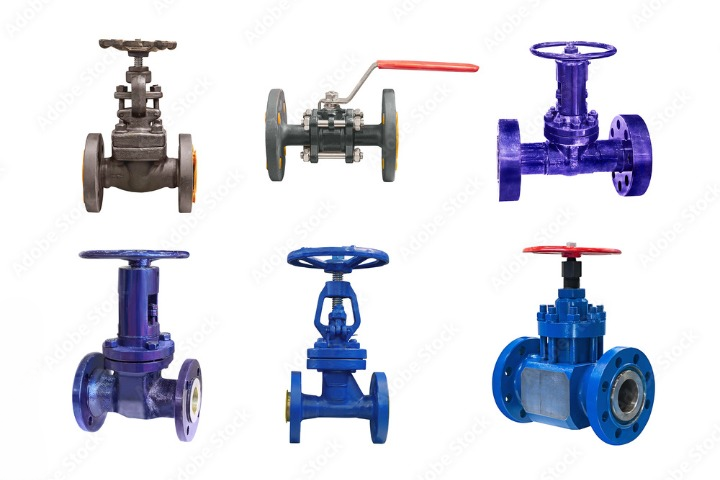
Six valve types and the service conditions that determine each choice
API 6D gate and ball valves dominate oil and gas pipeline isolation: they are designed for full-bore, on/off service with documented pressure-temperature ratings and pipeline-specific testing. Globe and control valves handle throttling in chemical processing and power plants, where tight shut-off and precise flow regulation matter more than low-pressure drop.
Butterfly and dual-plate check valves are the workhorses of water treatment and cooling systems, where large bore sizes, wafer-face installation and low-cost actuation are priorities. Check valves, whether swing, dual-plate or tilting-disc, belong wherever reverse-flow prevention is the primary function.
When carbon steel isn’t enough: material selection for corrosive and high-temperature service
WCB carbon steel covers most general service in moderate-temperature, non-corrosive environments. CF8M or 316 stainless steel is the correct choice for corrosive media, hygienic applications or food-grade environments. F11 and F22 alloy steel are specified for high-temperature steam service in power plants, where creep resistance matters. Duplex stainless, Inconel and other nickel-based alloys are reserved for sour service, seawater and aggressive chemical media where standard grades fail prematurely. If you do not fix the type and material before you approach suppliers, no amount of certification checking will save the procurement.
Certifications that gate approval: what each mark actually covers
ISO 9001 is one of the most misunderstood certificates in valve procurement. It tells you a manufacturer has documented processes, it does not confirm that a specific valve design has been tested, approved or is fit for your service. The marks that actually gate approval are application-specific, and the most relevant ones for Indian valve manufacturers and dealers are API, PED and IBR.
API, PED and IBR: the approvals that procurement cannot waive
API 6D covers pipeline ball, gate, plug and check valves made at a specific licensed facility. The licence applies to defined product types, pressure classes and size ranges; a manufacturer cannot apply the API 6D monogram to globe valves or to valves made at an unlicensed site. API 600 and API 602 apply to industrial steel gate, globe and check valves, including forged constructions. PED 2014/68/EU governs pressure equipment placed on the European market; buyers must verify the specific conformity module, product scope and Notified Body, not just that a manufacturer “holds CE.” IBR approval is non-negotiable for Indian boiler and steam systems. These are not interchangeable: a PED certificate does not establish API compliance, and an API monogram does not give EU market access.
SIL, fire-safe and NORSOK: when to ask for sector-specific qualifications
API 607 and API 6FA cover fire-safe testing for quarter-turn valves. A manufacturer may hold API 6D without holding a fire-safe certificate; projects that require fire-safe valves must specify the applicable standard separately and request the test report, valve design and covered size/rating range. SIL 2 or SIL 3 ratings apply to a specific safety function for a specific valve and actuator combination, not to a manufacturer’s entire catalogue. NORSOK M-650 governs foundry and material qualification for offshore Norwegian projects. Before approving any supplier, request the current certificate number, issuing body, scope, applicable manufacturing site, expiry date and the specific valve models it covers.
Manufacturing capacity and lead times: what to build into your project schedule
Vague lead-time ranges cause schedule risk. The numbers below are practical planning benchmarks drawn from established Indian manufacturers and reflect 2026 production conditions.
Lead times by valve type: a practical planning reference for Indian valve manufacturers
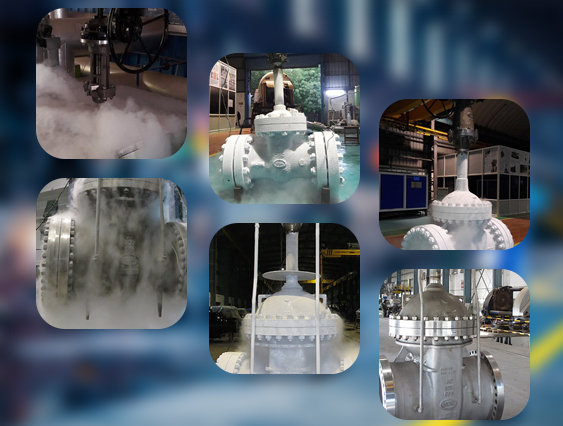
Standard manual ball and butterfly valves in carbon or stainless steel typically ship in four to six weeks from a manufacturer with stock or short production runs; actuated designs extend to six to eight weeks once actuator sourcing, mounting, calibration and functional testing are included. Gate and globe valves in alloy or duplex materials take eight to sixteen weeks, especially when third-party inspection witness points or API hydrostatic testing are involved. Control valves are always engineered-to-order: budget eight to sixteen weeks as a minimum, and longer when the sizing, actuator, positioner and safety certification package is complex. Special alloys, NACE compliance, cryogenic qualification or low-emission testing can add a further two to four weeks to any of these categories.
MOQ, phased dispatch and what to specify in your RFQ to get accurate quotes
There is no uniform industry minimum order quantity. Export-oriented manufacturers often accept a single trial valve; OEM production programmes typically require fifty to one hundred units per size. Large project orders above roughly five hundred units are usually dispatched in phases rather than a single shipment. The most important action at RFQ stage is to specify valve type, DN or NPS, pressure class, body and trim materials, end connection, actuation, applicable standard, inspection requirements, quantity per size and required-on-site date. Build your required-on-site date back by the confirmed lead time plus two weeks for inspection and logistics. Always confirm the manufacturer’s current shop loading, not just their rated capacity.
Why lifecycle cost matters more than the purchase order value
Consider, for example, a valve that costs 20% less at purchase but requires imported spares, has no local service support and carries a ninety-day warranty. Over a five-year asset life, that valve will almost certainly cost more to own than a higher-priced alternative backed by local support and a longer warranty. The purchase order value is the wrong scorecard. The components that drive that gap are rarely visible on the purchase order itself.
The hidden procurement costs that only appear after commissioning
The real cost components include spare-parts availability and lead time for trim, seats, actuator internals and packing; commissioning and start-up support; warranty scope and exclusions, particularly whether the warranty period starts at delivery or at commissioning; and access to third-party inspection bodies such as Bureau Veritas, Lloyd’s Register, DNV and TÜV during fabrication. A supplier who only handles new supply and does not support shutdown maintenance shifts that cost directly to the plant owner’s maintenance budget.
Export track record as a quality signal: what to look for in supplier references
Manufacturers who regularly export to the Middle East, Europe or the United States are typically subject to recurring audits by international clients and third-party inspection bodies. Recurring third-party audits of this kind are a stronger indicator of consistent quality than a certificate issued several years ago. L&T Valves, Hawa Valves, Supreme Valves India and GG Valves all have documented export references to these regions in oil and gas and power sectors. Ask any shortlisted supplier for references from projects of comparable size, specification and sector before raising a purchase order. A supplier that cannot produce a single comparable reference is a procurement risk, regardless of its certificate stack.
Indian valve manufacturers worth putting on your evaluation list
The valve fabrication companies below are organised by certification strength and portfolio breadth. This is a starting shortlist for procurement teams evaluating Indian valve manufacturers, not an exhaustive directory.
Manufacturers with broad certification portfolios and multi-sector supply capability
L&T Valves (Chennai) holds API 6D, PED, SIL, ISO 15848-1, API 607 and API 622, with documented supply to critical oil and gas and power-sector projects globally. Oswal Valves carries API 6D, API 600, CE/PED, IBR, fire-safe, TA-LUFT, cryogenic testing and NORSOK-related foundry approvals, one of the broader certification stacks among Indian manufacturers. Libra Valves holds API 6D, API 600, API 602, SIL 3, IBR and EIL approvals, with documented exports to over twenty-five countries.
BellOSeal Valves carries a particularly strong stack for chemical and chlorine-process applications, including PED 2014/68/EU, IBR, TA-LUFT, API 624, Euro Chlor and Rus Chlor approvals. Leader Valves holds API 6D, API 600, PED and TÜV-verified foundry approval. Hawa Valves and Virgo Valves cover API 6D and fire-safe with documented export activity. For specific project requirements, BDK Valve (Hubballi) and Atam Valves (Jalandhar) are worth including in regional evaluations.
What to verify before issuing a formal RFQ to any manufacturer on this list
Before sending an RFQ, confirm whether a listed address is a factory, registered office or sales office. These are not the same thing, and inspection access depends entirely on the manufacturing site. Request the exact manufacturing scope for the valve type you need: a manufacturer licensed for API 6D ball valves cannot monogram gate valves unless that product is within the API licence scope. Verify the certificate number against the issuing body’s online registry, not just the document the manufacturer sends you.
How to shortlist industrial valve manufacturers without the usual back-and-forth
The evaluation framework is straightforward once you know what to look for. A typical shortlisting session, working through valve type, certifications, lead times and references, should not take more than a day if your specification is clear and your supplier data is organised. The question is how efficiently you can apply it.
Five questions to put to every valve supplier before raising a purchase order
- What is your API monogram scope, licence number and current expiry date?
- Which manufacturing sites are covered by your PED/CE certificate and what is the product scope?
- Can you provide third-party inspection access from Bureau Veritas, TÜV or Lloyd’s Register during fabrication?
- What is your current shop loading for this valve type, and what is your committed delivery date?
- Can you provide references from a comparable project in our sector, including end-user contact details?
These five questions will rapidly screen out unsuitable suppliers; combine them with document and reference checks as part of a structured vendor qualification process. A manufacturer that cannot answer all five clearly and quickly is telling you something important about how the relationship will go after order placement.
Using Enggpro to compare verified manufacturers and connect with suppliers directly
On Enggpro, procurement teams can browse a verified directory of Indian industrial valve suppliers organised by product category, compare certification portfolios, submit RFQs directly to shortlisted manufacturers and track live tenders from PSUs, EPC contractors and government bodies, all in one place. Rather than cold-calling distributors or cross-referencing multiple trade directories, you can move from specification to shortlist to supplier contact within a single session.
Use the five questions above as your starting point. The right industrial valve manufacturers are within reach, the next step is asking the right questions and using a structured framework to shortlist industrial valve manufacturers with confidence.