Introduction
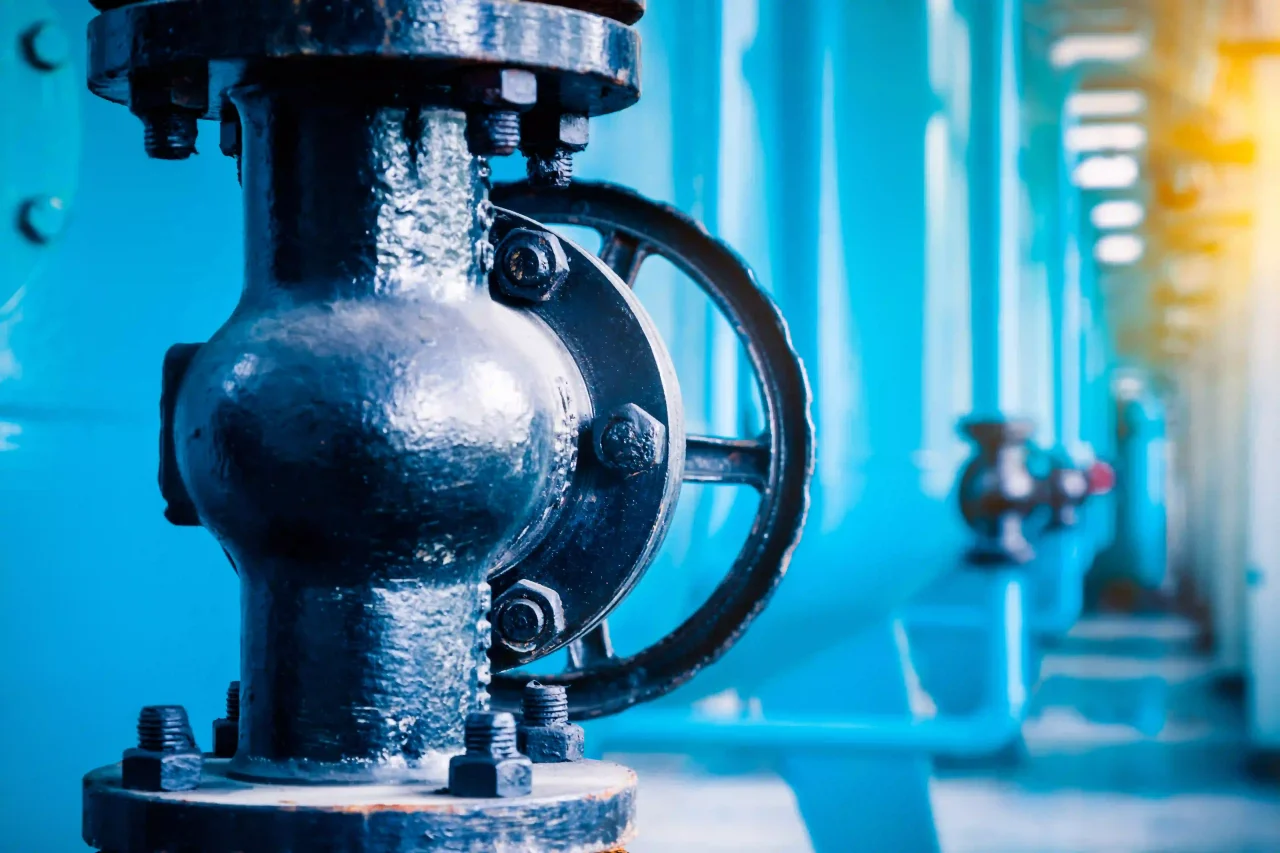
Ball valves are among the most commonly specified valves in industrial piping — and among the easiest to get wrong on sourcing, since surface-level specs (size, pressure rating) can look identical across suppliers while actual build quality varies significantly. Here’s what to check before placing an order.
Ball Valve Design Types
- Floating ball valve — the ball moves slightly under pressure to seal against the downstream seat; common in smaller sizes and lower-pressure applications
- Trunnion-mounted ball valve — the ball is fixed in place by a trunnion, with the seats providing the seal; used in larger sizes and higher-pressure applications where floating-ball designs aren’t practical
- Full bore vs. reduced bore — full bore matches the pipe’s internal diameter (lower pressure drop, allows pigging); reduced bore is more compact and economical where flow restriction is acceptable
Materials and Pressure Classes
Common body materials include carbon steel, stainless steel (304/316), and alloy steel for higher-temperature or corrosive-service applications. Pressure class (e.g., Class 150, 300, 600 per ASME B16.34) must match your piping system’s design conditions — confirm the manufacturer’s stated pressure class aligns with actual third-party test data, not just a catalog number.
What to Verify Before Ordering
- Seat material — PTFE, RPTFE, or metal-seated depending on temperature and service; seat material directly affects sealing performance and valve life
- Fire-safe design — required for many oil & gas and process applications (API 607/API 6FA certified)
- Actuation compatibility — manual, pneumatic, or electric actuator mounting (ISO 5211 flange) if the valve will be automated later
- Testing documentation — hydrostatic shell test and seat leakage test reports (per API 598 or equivalent) for the specific batch, not generic type-test data
- Double block and bleed capability — relevant for isolation-critical applications
Questions to Ask a Manufacturer
- Can you provide seat leakage test reports specific to this order’s batch?
- Is the valve fire-safe certified, and to which standard?
- What’s your standard pressure class range, and do you manufacture to ASME B16.34?
- Can the valve be supplied actuator-ready if we plan to automate it later?
Typical Size Ranges and End Connections
Ball valves are manufactured across a wide size range, and the right end connection depends on how the valve integrates into your piping system:
- Threaded (NPT/BSP) — common in smaller sizes (up to roughly 2″), easier installation and maintenance access
- Flanged — standard for larger sizes and higher-pressure applications, following ASME B16.5 flange dimensions
- Butt weld / socket weld — used where a fully welded, leak-tight connection is preferred, common in higher-pressure process piping
Confirming end connection alongside size and pressure class upfront prevents a mismatch with your existing piping design.
Common Mistakes When Sourcing Ball Valves
- Assuming all “Class 150” valves are equivalent — pressure class alone doesn’t capture seat material, fire-safe rating, or actual tested performance; always request supporting documentation
- Overlooking seat material compatibility — PTFE seats aren’t suitable for all temperature ranges or chemical exposures; confirm compatibility with your actual process medium, not just the generic “ball valve” spec
- Not confirming actuator mounting standard early — if automation is planned even for a future phase, specifying ISO 5211-compliant mounting from the start avoids costly retrofitting later
- Treating all suppliers’ pressure/temperature ratings as directly comparable — ratings can be presented differently; ask for the full pressure-temperature chart rather than a single headline number
Frequently Asked Questions
What’s the difference between floating and trunnion-mounted ball valves?
Floating designs rely on the ball shifting slightly to seal, suited to smaller/lower-pressure applications; trunnion designs fix the ball in place and are used for larger sizes and higher-pressure service where torque and sealing stability matter more.
Do I need a fire-safe certified ball valve?
This depends on your application and industry standard — oil & gas and many process industries require it by specification; check your project’s governing standard before ordering.
How do I confirm pressure class compliance?
Request ASME B16.34 or equivalent compliance documentation and batch-specific hydrostatic test reports rather than relying on general product literature.
Source Verified Ball Valve Manufacturers on Enggpro
Post your ball valve requirement on Enggpro to receive quotes from verified manufacturers, or browse live ball valve RFQs and tenders.