
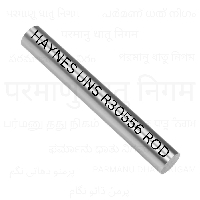
HAYNES UNS R30556 ROD

HAYNES UNS R30556 ROD

PARMANU DHATU NIGAM Dubai
1979

Not Yet Rated

Overview

Parmanu
Dhatu Nigam is à¤­à¤¾à¤°à¤¤ largest independent multi-metals and alloys stockholder. Parmanu Dhatu Nigam having the manufacturing
facilities at Bangalore (भारत) and
office at

Mumbai, Parmanu Dhatu Nigam is the world leading manufacturer of Haynes 556 – strips, rods, bar, plates, wires, bolt, nut, washer

for the last 50 years. Haynes UNS R30556

556 is a nickel-based

alloy that is resistant to
sulfidizing, carburizing, and chlorine-bearing

environments at high temperatures. It also has good oxidation resistance,

fabricability, and high-temperature

strength. Haynes UNS R30556

556 is also known as UNS R30556

alloy. It is used for gas metal
arc and gas tungsten arc welding of Haynes HR-120

alloy to itself. Haynes alloy UNS R30556

556 filler metal is an iron-nickel-chromium-cobalt

alloy that combines
effective resistance to sulfidizing, carburizing, and

chlorine-bearing environments with excellent strength and oxidation resistance

at high temperatures. This datasheet provides information on composition,

physical properties, elasticity, and tensile properties as well as creep. It

also includes information on corrosion resistance as well as joining. Specifications Super Alloy

Haynes 556 AlloyAMS 5831 | AMS 5874 | AMS 5877

| ASTM

B366 | ASTM

B435 | ASTM

B572 | ASTM

B619 | ASTM

B622 | ASTM

B626 | UNS

R30556 | DIN

X12CRCONI2120 | ANFOR

Z12CKNDWNB21.20.20 | ER3556 | WNr 2.4952 Haynes UNS

R30556 AWS

A5.9 ER3556 Filler Metal Superalloy

Nickel Based Haynes 556 Fabrication and Heat

TreatmentMachinabilityHAYNES 556

alloy can be machined using
conventional techniques employed for iron based

alloys. High speed operations
like milling, grinding or turning can be

performed using water-base coolants. Heavy lubricants are recommended for

operations such as boring, broaching, tapping or drilling. FormingHAYNES 556

alloy can be formed by
conventional means. For cold forming this alloy,

heavy-duty lubricants can be used. WeldingWelding of HAYNES 556

alloy is performed through
commonly used welding techniques like gas

tungsten arc welding, shielded metal-arc welding, metal-arc welding and

submerged-arc welding. However, an alloy filler metal that suits this alloy

should be used. ForgingHAYNES 556

alloy can be forged at
temperatures ranging from 927 to 1177°C (1700 to

2150°F). Cold WorkingHAYNES 556

alloy can be cold worked
using standard tooling methods. As plain carbon

steels has an ability to produce galling, they are not preferred for forming

this alloy. Galling can be minimized with the help of soft die materials. AnnealingHAYNES 556

alloy can be annealed at
1177°C (2150°F) followed by rapid cooling of air

and water quenching. HardeningHAYNES 556

alloy can be hardened by
cold working. ApplicationsThe following are the major

applications of HAYNES 556

alloy: IncineratorsGas turbinesHeat transfer systems Fabrication and Heat

TreatmentMachinabilityHAYNES 556

alloy can be machined using
conventional techniques employed for iron based

alloys. High speed operations
like milling, grinding or turning can be

performed using water-base coolants. Heavy lubricants are recommended for

operations such as boring, broaching, tapping or drilling. FormingHAYNES 556

alloy can be formed by
conventional means. For cold forming this alloy,

heavy-duty lubricants can be used. WeldingWelding of HAYNES 556

alloy is performed through
commonly used welding techniques like gas

tungsten arc welding, shielded metal-arc welding, metal-arc welding and

submerged-arc welding. However, an alloy filler metal that suits this alloy

should be used. ForgingHAYNES 556

alloy can be forged at
temperatures ranging from 927 to 1177°C (1700 to

2150°F). Cold WorkingHAYNES 556

alloy can be cold worked
using standard tooling methods. As plain carbon

steels has an ability to produce galling, they are not preferred for forming

this alloy. Galling can be minimized with the help of soft die materials. AnnealingHAYNES 556

alloy can be annealed at
1177°C (2150°F) followed by rapid cooling of air

and water quenching. HardeningHAYNES 556

alloy can be hardened by
cold working. ApplicationsThe following are the major

applications of HAYNES 556

alloy: IncineratorsGas turbinesHeat transfer systemsPARMANU DHATU NIGAM UNS R30556
Vision:
Mission:
Legal status:

Proprietorship

Type:

Employee strength:

1-10 Employees

Founded year:

1979

GST/VAT:

CIN:

Location:

PARMANU DHATU NIGAM Dubai

Turnover:

Products & Services

Approvals

Documents

Reviews & Rating

Not Yet Rated


Write a review to let others know about your experience. Whether it's a compliment, suggestion, or concern — your voice helps improve services and guide future customers.

Write A Review
HAYNES UNS R30556 ROD owner

HAYNES UNS R30556 ROD

Verified

Manage notes

Qualify this company as a potential lead

Login to create notes for this supplier.