Sourcing industrial pipes in India looks straightforward until you are sitting with a dozen quotations and none of them reference the same standard. One supplier quotes IS 1239, another lists ASTM A106, and a third simply writes “as per buyer’s requirement.” The market has many manufacturers, from large integrated mills to regional distributors, and the differences between them are rarely obvious from a catalogue page or a price list alone. Choosing the right pipes manufacturer in India for an industrial project therefore demands a structured approach, not just a round of phone calls.
This article gives you a clear framework to cut through that noise. By the time you finish reading, you should have a practical shortlist of pipe manufacturers by material type, know exactly which certifications to verify before placing an order, and understand how to write an RFQ that gets serious, comparable responses. Procurement teams who streamline this process, using verified supplier directories, live RFQ feeds, and structured evaluation criteria, consistently reach the comparison stage faster than those relying on cold calls and trade directories alone.
The main pipe materials used in industrial projects
Getting the material selection right before you approach any supplier saves significant time. Each material category has its own set of manufacturers, certifications, and price dynamics, and mixing up your specification at the enquiry stage produces quotations that cannot be compared.
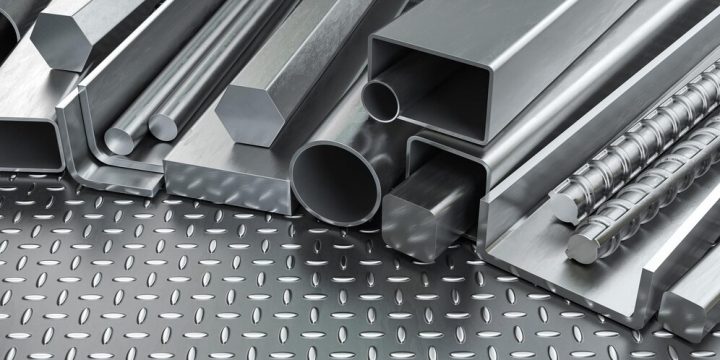
Mild steel (MS) pipe is the workhorse of Indian industrial piping. It handles high-pressure fluid transfer, structural applications, and fire-fighting systems. Galvanised iron (GI) pipe is essentially MS pipe with a zinc coating and remains the standard choice for water supply lines where corrosion is a concern. Stainless steel pipes, typically in grades 304 or 316, are specified for chemical processing, pharmaceutical plants, food-grade systems, and offshore environments where MS is unsuitable.
PVC pipe dominates plumbing, drainage, and low-to-medium pressure water supply. It is lightweight, corrosion-resistant, and cost-effective, which is why it is the default for housing projects, irrigation networks, and sewage systems. HDPE pipe operates at a different tier: it handles higher pressures, tolerates aggressive soil conditions, and is the preferred material for water mains, gas distribution, mining slurry lines, and large-diameter transmission projects. Your choice of material determines which segment of pipe suppliers in India can actually serve your specification.
Standards and certifications that define a serious manufacturer
Not all certifications carry the same weight, and a common mistake in procurement is treating an ISO 9001 management-system certificate as equivalent to a product-specific BIS licence. They are not the same thing, and the distinction matters when your project has a contractual or statutory compliance requirement.
For domestic water and structural pipe, the relevant IS standards include IS 1239 for MS pipe, IS 3589 for large-diameter ERW, IS 4984 for HDPE pressure pipe, and IS 4985 for uPVC pressure pipes; BIS/ISI product certification against these standards is the baseline for any reputable pipes manufacturer in India. For oil and gas line pipe, API 5L governs grades from B through X80; OCTG products fall under a separate API 5CT licence. ASTM and ASME standards apply to seamless and alloy pipes used in process, boiler, and heat-exchanger applications.
Before committing to a supplier, request the product-specific BIS licence number and its approved scope, covering the grade and size range you are buying. If API certification is relevant, verify the API monogram licence number separately, because an API 5L licence and an API 5CT licence are issued independently. For critical applications, require heat-wise EN 10204 3.1 or 3.2 mill test certificates, and confirm that the certification applies to the manufacturing plant producing your order, not to a head office or a sister facility with a different scope.
How to choose a pipes manufacturer in India: leading players by material category
The Indian pipe manufacturing sector is large and segmented. Knowing who the established players are by material type saves you the effort of evaluating suppliers who cannot actually meet your specification.
PVC and HDPE: scale and market position
Supreme Industries holds an estimated 12.5% share of India’s PVC pipe market and operates approximately 870,000 tonnes of plastic-pipe capacity, making it the largest domestic player. Finolex Industries is the second-largest, with PVC resin capacity of around 270,000 tonnes per year and pipe capacity above 400,000 tonnes, supported by backward integration into resin production. Astral, Prince Pipes (with capacity of approximately 435,000 tonnes per year), and Ashirvad Pipes round out the leading five for PVC applications. For HDPE-specific or large-diameter projects, Jain Irrigation and Apollo Pipes are important additions to your evaluation list. Note that standard domestic PVC orders typically carry lead times of two to four weeks, whereas HDPE procurement, particularly for larger-diameter or project-specific runs, commonly runs four to eight weeks.
Evaluating a pipes manufacturer in India: steel pipe volume leaders and specialist mills
APL Apollo Tubes is the clear volume leader in India’s ERW and structural steel-tube market, with installed capacity of approximately 5 million tonnes per year and reported FY2025 revenue of around Rs 20,690 crore (as per the company’s FY2025 annual results). Welspun Corp and Jindal SAW lead the large-diameter line pipe and infrastructure segment; both hold API 5L monogram licences at specific facilities and regularly serve EPC, oil and gas, and water transmission projects, buyers should verify the current API Composite List entry for the relevant plant before placing an order. For high-value applications requiring stainless steel, alloy, or process pipe, Ratnamani Metals and Tubes is the recognised specialist among steel pipe manufacturers in India. Maharashtra Seamless and ISMT serve the seamless and OCTG market; both hold API 5CT monogram licences at designated facilities, which should similarly be confirmed on the API Composite List.
Sector-specific fit: matching the supplier to the application
A supplier’s size and certifications only matter if they align with what your project actually requires. The leading manufacturers each have distinct sector strengths, and selecting one outside its core application is a procurement risk. For instance, a mill with strong API 5L credentials may have no meaningful capacity or experience in uPVC pressure pipe for municipal water schemes, two very different segments of the market.
For upstream oil and gas, you need manufacturers with a valid API 5L or API 5CT monogram licence and PSL2 capability if your project demands stricter chemical and mechanical controls. Welspun Corp, Jindal SAW, Man Industries, and Maharashtra Seamless are the manufacturers regularly associated with pipeline, OCTG, and EPC tendering in India and export markets. EPC contractors sourcing for government-funded infrastructure projects also typically require IBR approval for boiler-grade pipe, which narrows the field further.
Water infrastructure, irrigation, and municipal projects are served most actively by HDPE pipe manufacturers across India. Supreme Industries, Finolex, and Prince Pipes supply water-supply networks, while Jain Irrigation has a strong presence in agricultural and irrigation installations. GI pipe from IS 1239-licensed mills remains common for last-mile water distribution in urban housing projects. For large-diameter transmission pipelines under government or PSU contracts, Jindal SAW’s ductile-iron pipe division and Welspun’s coated-pipe products are frequently specified.
How to evaluate a pipes manufacturer in India before committing
Certifications confirm compliance, but they do not tell you whether a supplier can deliver your order on time, at the right location, and at the quality level your application demands. These are separate questions, and they require separate answers.
Capacity and lead time alignment matter as much as certification. Confirm the supplier’s installed annual capacity against their current order book load. For PVC, standard domestic orders typically carry lead times of two to four weeks; for HDPE, particularly for larger or project-specific runs, expect four to eight weeks. For MS and steel pipe, stock material may be available within days, but planned orders with specific grades, coatings, or mill certifications run four to eight weeks. Always clarify whether the supplier handles delivery to your project site or whether freight from their nearest stocking yard is your responsibility.
A supplier who routinely exports to the Middle East, Europe, or the United States generally operates to a tighter quality regime than one serving only the domestic commodity market. Ask for references or purchase orders from similar projects and verify that the supplier’s in-house or third-party testing covers hydrostatic testing, NDT (ultrasonic or radiographic as required), and dimensional inspection for your specification. For critical applications, insist on independent third-party inspection at the mill. These criteria, combined with the certification checks already discussed, give you the clearest picture of supplier reliability before you place a rupee.
Your procurement checklist and how to get quotes faster
Vague RFQs produce vague quotations, and vague quotations waste everyone’s time. The single most effective step you can take is to specify your requirement precisely before you send out a single enquiry; suppliers who receive an incomplete brief will either pad their quote with assumptions or ignore the request entirely.
Every pipe RFQ should include the following:
- Nominal bore or outside diameter, and wall thickness or schedule/SDR
- Pressure class and applicable standard (IS, ASTM, API, and grade)
- Material: carbon steel, SS 316, uPVC, PE 100, or other
- Surface treatment or coating requirements
- Required certifications: BIS licence scope, API monogram, EN 10204 MTC type
- Quantity in metres or tonnes, delivery city, and whether GST and freight are included or quoted separately
These variables can shift the final delivered price more than the material category alone. When a supplier pushes back on providing an itemised breakdown, treat that as a signal about how they will handle post-order queries: press for line-by-line clarity at the quotation stage, or move to the next vendor on your list.
Reaching out to individual manufacturers one by one is slow and inconsistent. Enggpro gives procurement teams direct access to a verified directory of pipe manufacturers and distributors across India, organised by product category, covering PVC pipe companies in India, HDPE pipe manufacturers, steel pipe manufacturers, and more. Buyers can post a single RFQ and receive responses from multiple verified suppliers, or browse live tenders from PSUs, EPC firms, and government bodies where pipe procurement is active. Suppliers submit quotes directly, and the entire process from enquiry to comparison happens in one place. For pipe manufacturers and distributors in India looking to expand their order book, Enggpro’s tender and RFQ feeds surface relevant opportunities daily.
Choosing the right vendor: a structured approach
Choosing the right pipes manufacturer in India for an industrial project is not a matter of picking the largest company or the cheapest quote. It is about matching your material specification, quality standard, sector requirement, and delivery timeline to a supplier who can execute reliably against all of them.
Start with your material type. Confirm the certifications that your application demands, whether BIS/ISI, API 5L, API 5CT, ASTM, or a combination. Assess capacity and logistics readiness, and write a precise RFQ that leaves no room for ambiguity. The manufacturers covered in this guide, across PVC, HDPE, and steel categories, represent the established tier of Indian suppliers with documented capacity, certifications, and sector experience. Use Enggpro to post your RFQ, compare responses from verified suppliers, and connect directly without the usual back-and-forth. Approaching the right pipes manufacturer in India becomes straightforward once you know exactly what to verify before making contact.